Raypainting (with Dóra Berkes)
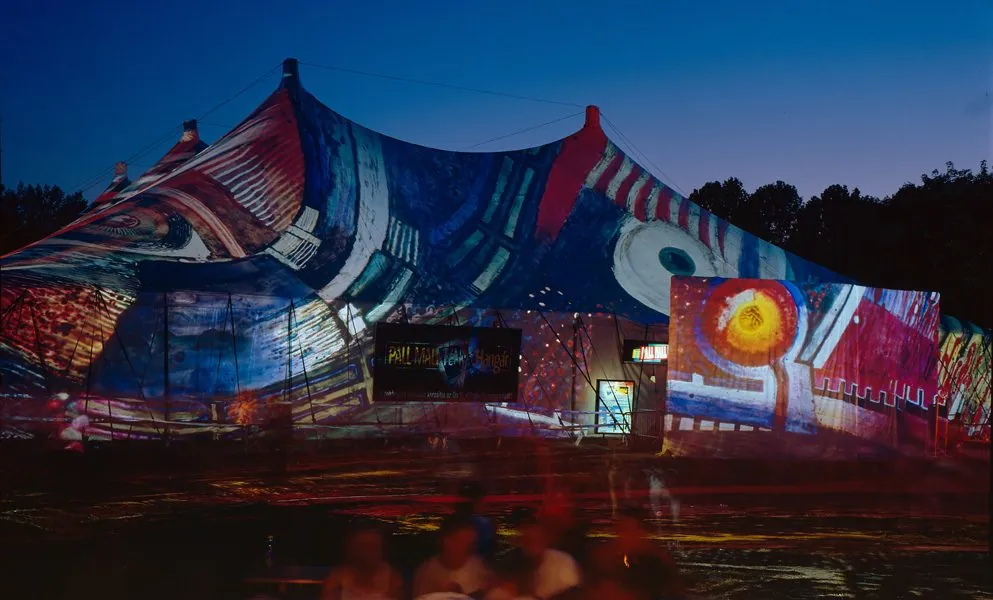
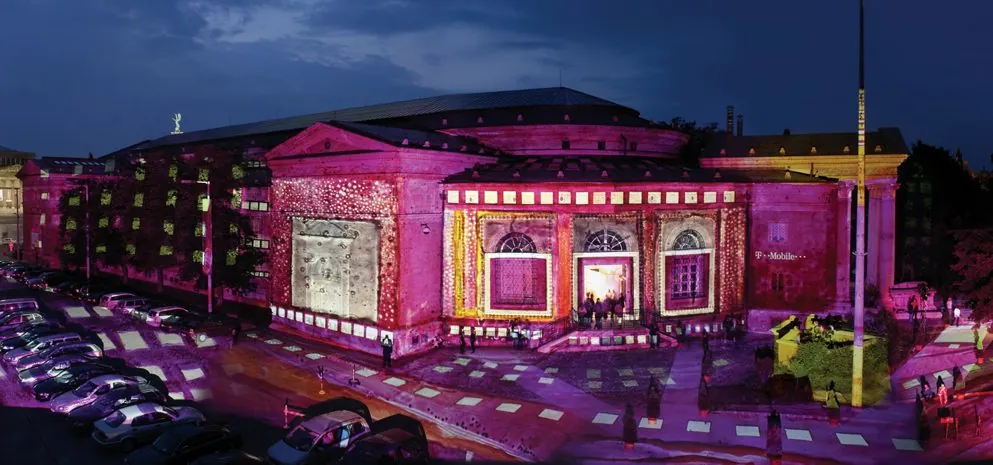
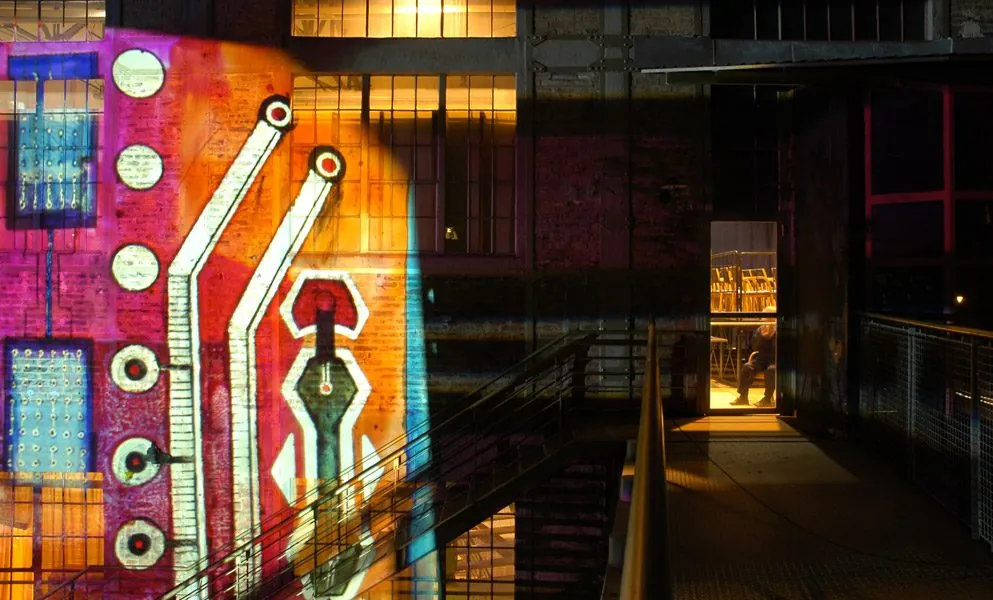
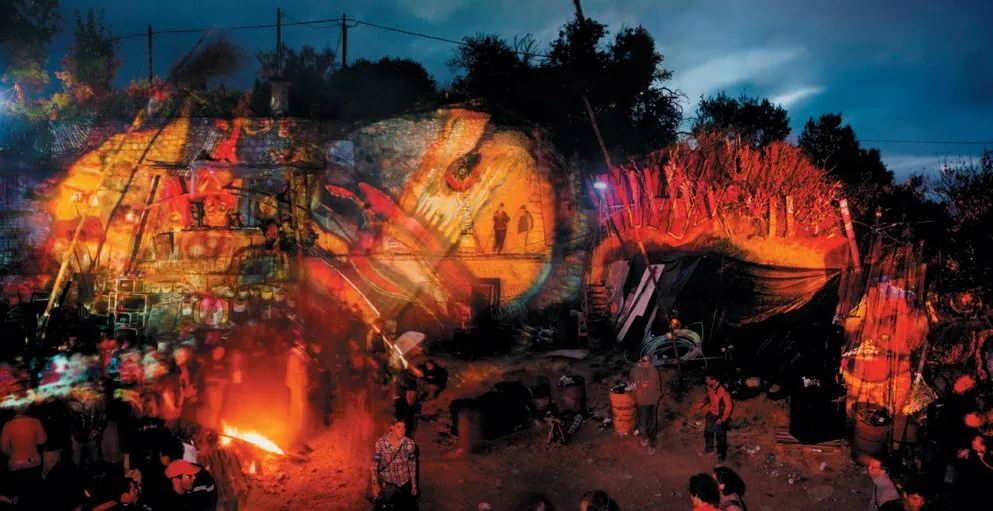
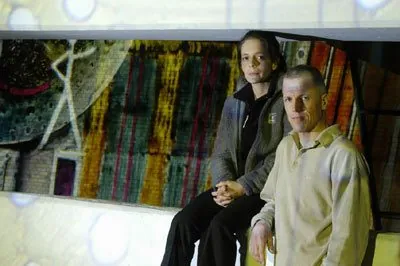
Raypainting is the collaborative work of Péter Kozma and Dóra Berkes (DJ Dork), working together as Dorkandkozma: glass paintings by Berkes projected onto buildings and landscapes.[1][2]
How it worked
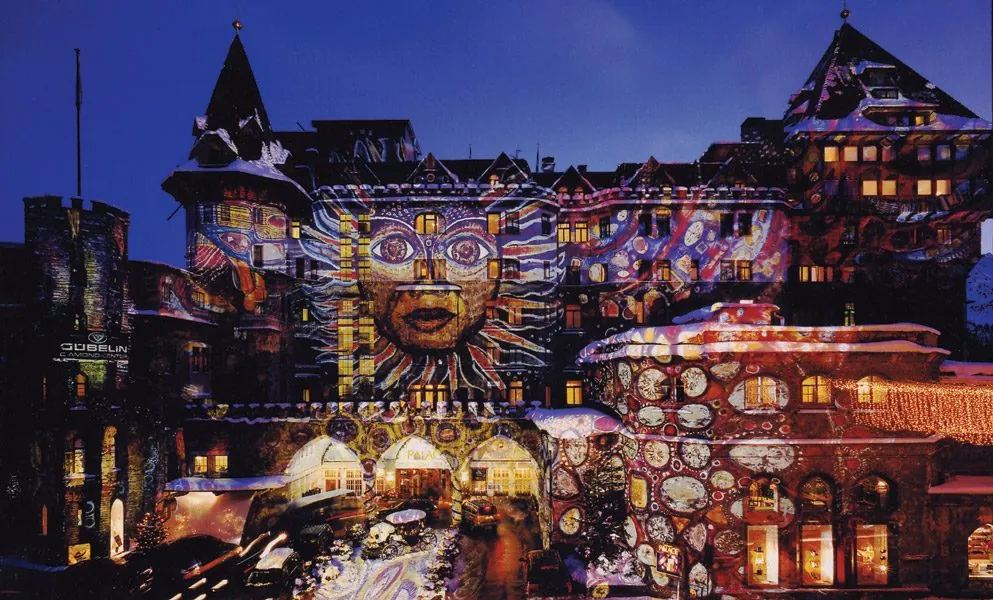
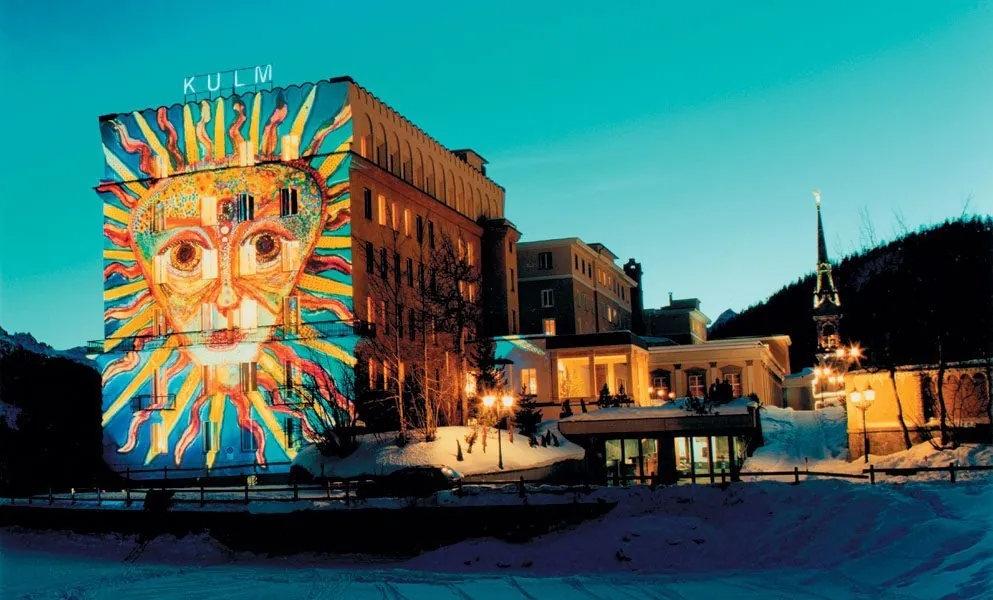
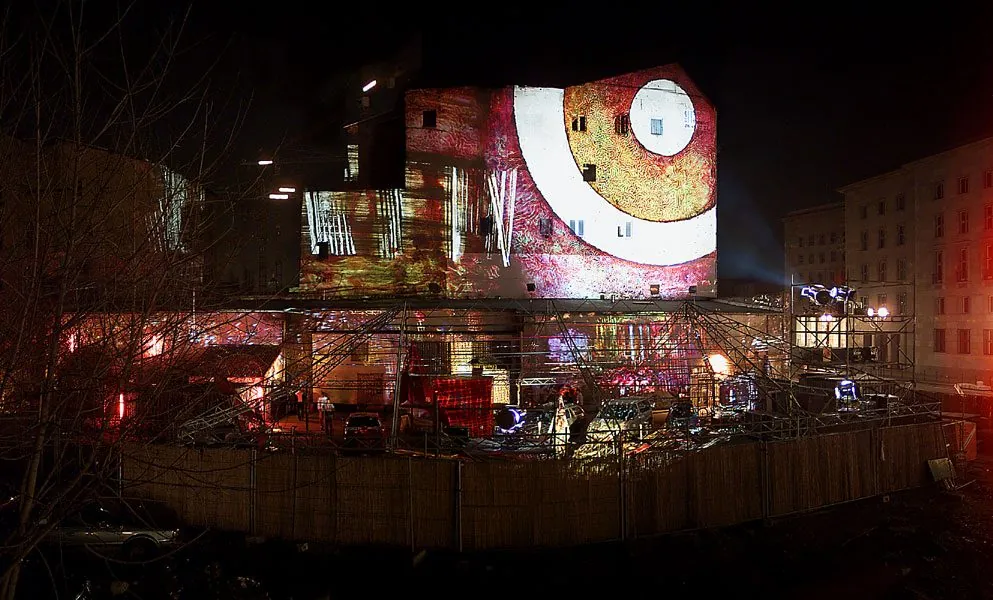
Kozma was responsible for the technical execution, the choice of site and the spatial organisation; Dóra Berkes created the paintings on 18 × 18 cm glass plates, which were projected with high-performance Pani projectors.[1]
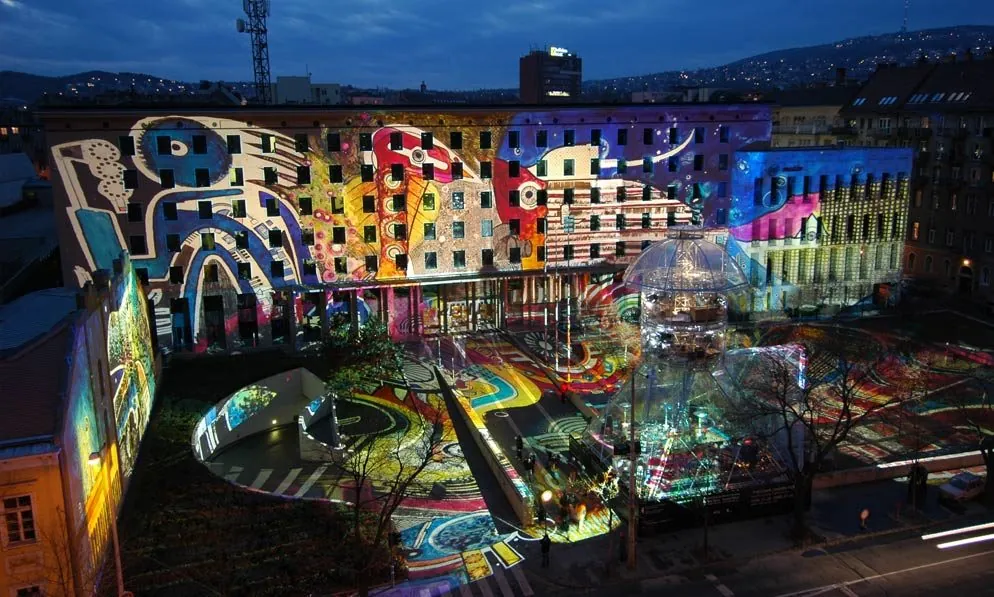
Kozma described his part as choosing the district and the buildings, deciding what to project on and what not, and thinking through the space square metre by square metre; Berkes's glass paintings were the projected layer added to the environment, and the installation worked like a montage.
From the Raypainting history
Dorkandkozma is a pseudonym for Dóra Berkes and Péter Kozma, two artists involved in fine and applied arts who have been working together since 1995. Raypainting is one of the pair’s joint artistic achievements, a technique they have developed over a number of projects since 1996. Painted on glass and projected onto buildings or various other objects, these images have been used by Berkes and Kozma as a substitute for large-scale canvas paintings. Raypainting is now a registered trademark of Dorkandkozma.
In addition to Raypainting, Dorkandkozma have worked on the international contemporary art scene in a variety of forms. Their visual arts line includes paintings by Berkes and theatre set designs by Kozma. The young duo is also active in the international techno scene and has been in charge of visual and audio effects for various electronic music events.
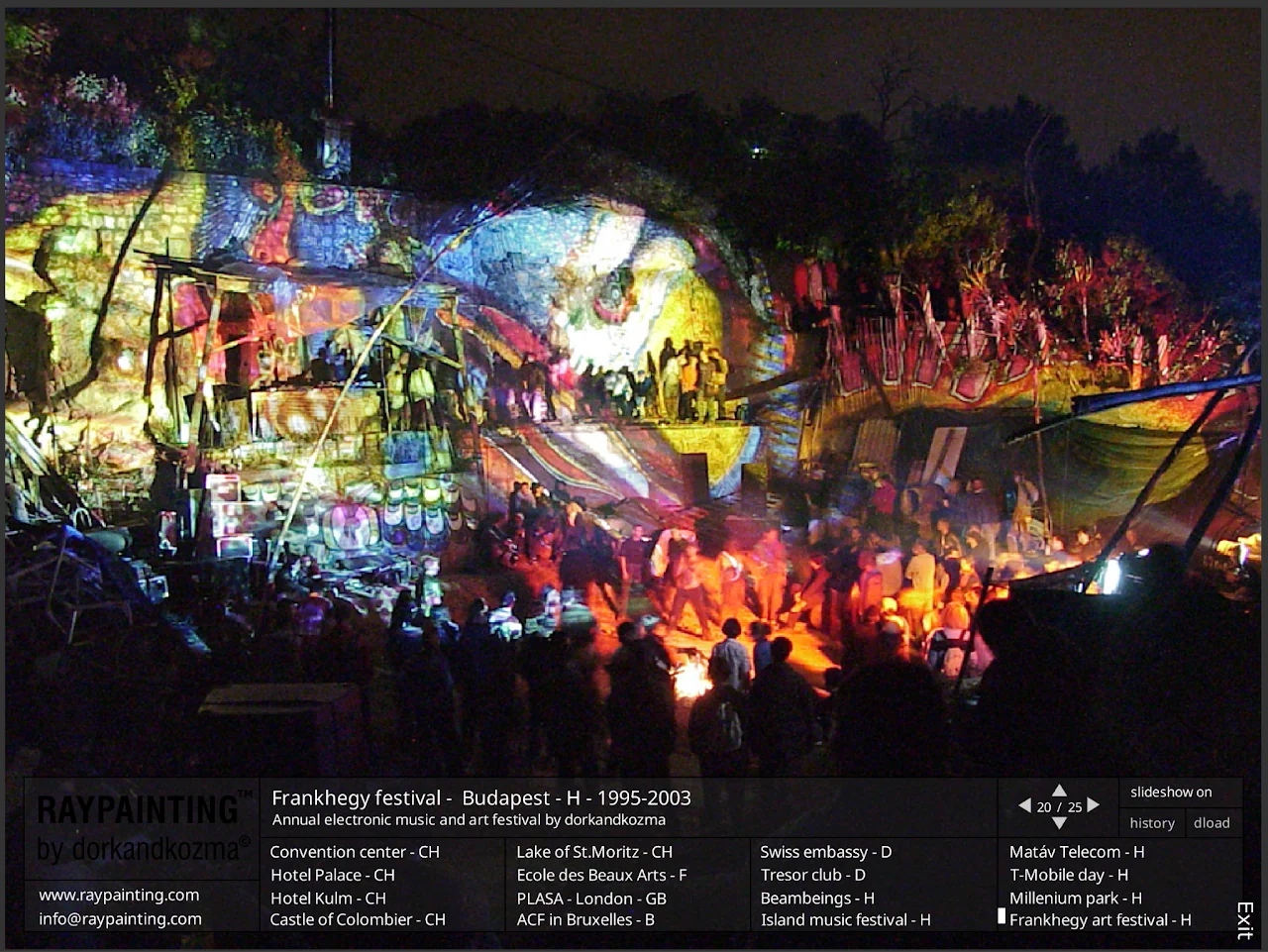
The Frankhegy Festival of electronic music and contemporary art, organized by Dorkandkozma, and the musical accomplishments of DJ Dork (Dóra Berkes) have achieved recognition across Europe. Berkes and Kozma seek to establish a place for the budding avant-garde of intellectual electronic music in the existing framework of contemporary art. To achieve this goal, they have channeled their efforts into developing an international network of fellow artists, and so created an extensive art forum reaching across national and language barriers.
The Concept of Raypainting
In recent years, painter Dóra Berkes and applied artist Péter Kozma have staged several joint art projects of non-traditional dimensions and in non-traditional exhibition venues. Most of their works are multimedia projects in which action, space, projected images, and music are merged into vast artistic productions featuring active yet spontaneous audience involvement.
Projecting images onto public buildings, architectural forms, and elements of nature have led the artists to recognize, among other things, that the mode of expression offered by Raypainting can function powerfully in various areas of creative art. Continuous exploration of roots and origins have enabled Berkes and Kozma to make artistic statements and propositions concerning urban and natural landscapes at various prominent locations in big cities and elsewhere.
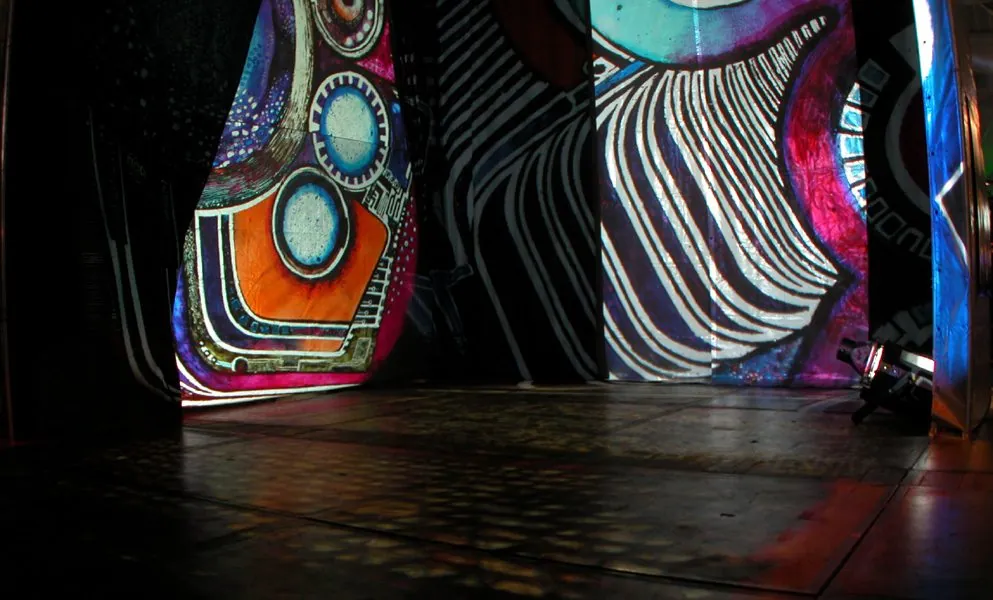
Raypainting is the poetry of light—a special kind of visual frottage, stone-washing, and mimicry rolled into one. As an independent genre, Raypainting constitutes a clearly defined and important phenomenon. The basic concept itself is nothing new; creating images with projectors has been a widely used method in stage set design for a long time. Raypainting, however, is more than just a simple trick deployed to create grand images.
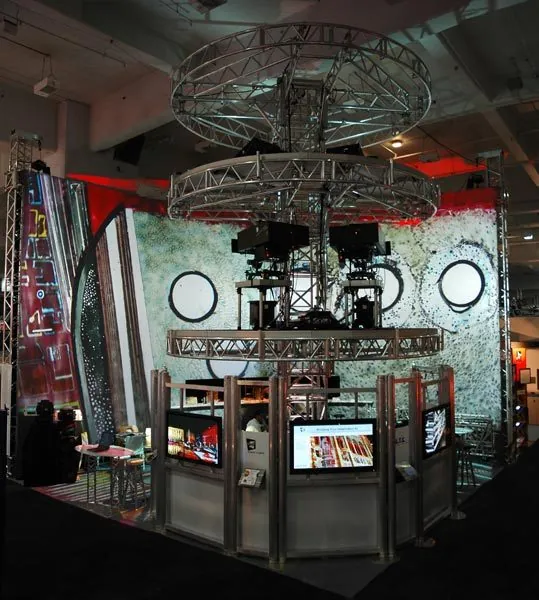
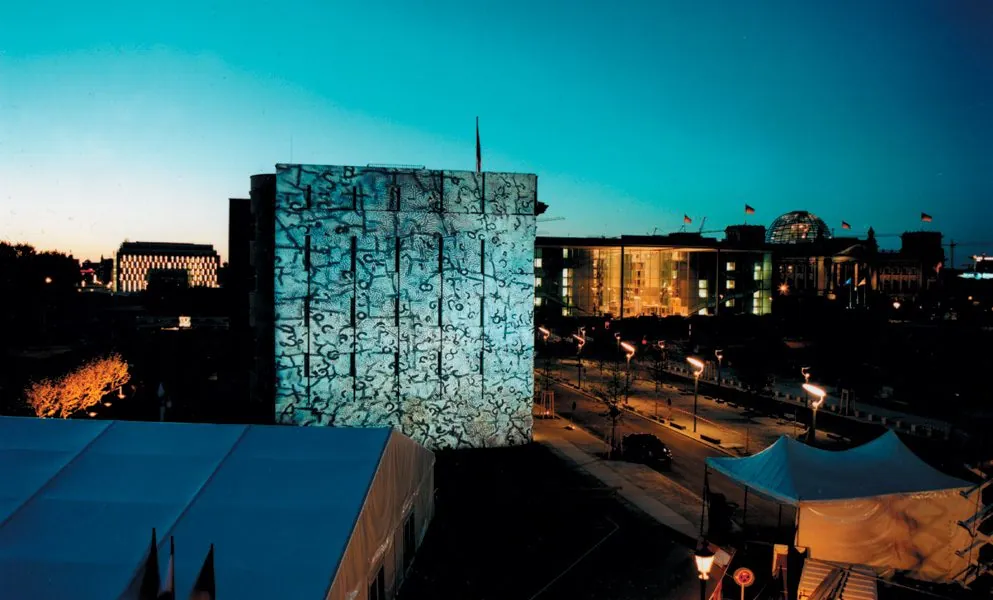
Improving on traditional slide show techniques, Dorkandkozma use powerful stage projectors to illuminate glass paintings, which combine with the textural properties of the surface carrying the projected image to form composite works of art. The pictures are painted by Berkes after a site survey and a planning phase, which is done in cooperation with Kozma. The imaging process, as implemented by raypainters, has crystallized into something close to alchemy, as Berkes’s pictures contain not only paint and liquid chemicals but also glass particles and other solid additives on top of the glass surface.
Raypainting as a phenomenon is closely related to all forms of artistic expression based on light projection. Its precursors include various art forms that endeavored to explore color and light relations, most notably the Rayogram, László Moholy-Nagy’s Light-Space Modulator, the Orphism movement, or the mobile light sculptures of Nicolas Schöffer. All of these art movements sought to create a pure perceptional quality and were based on the optical/sensory/emotional impacts of a most insubstantial material: light.
Excerpt, quoted unchanged. The source also has French and Hungarian versions.
Projects
| Year | Project | Sources |
|---|---|---|
| 1996 | Jeff Mills electronic dance party, Katakomben, Zürich | [3][4][1] |
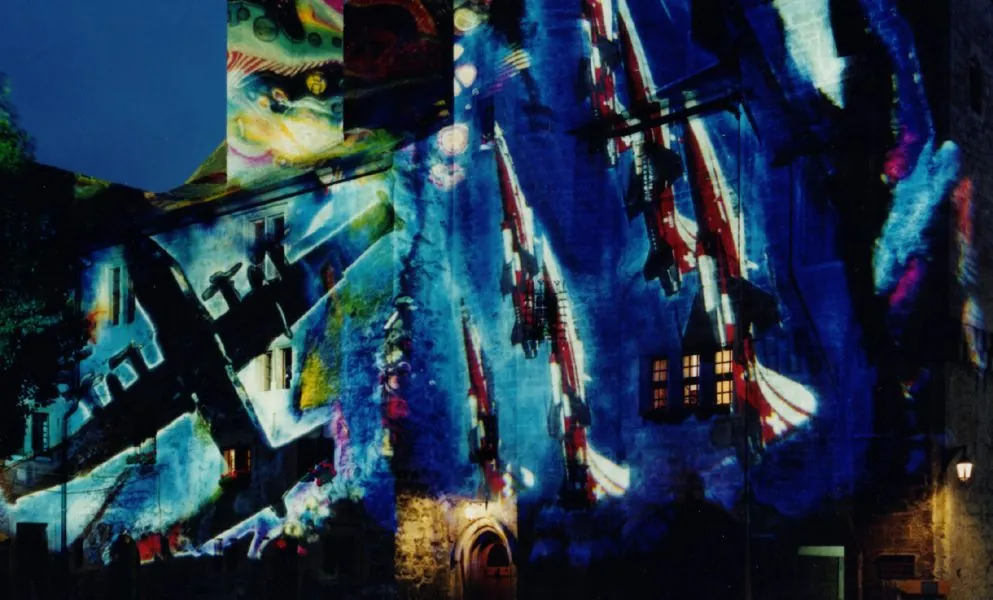
| 1997 | Swiss Raid Commando, XIII international competition, Colombier (Switzerland) | [3][1] |
| 1998 | Gourmet Festival, Lake St. Moritz | [3][1] |
| 1998 | Prodega C&C Grand Opening, Crissier (Switzerland) | [3][4] |
| 1998 | Presentation of the new Algida logo, ice rink, Budapest | [3] |
| 1999 | La Nuit du Champagne (Pommery), Hotel Palace, St. Moritz | [2][3][1] |
| 1999/2000 | Diamonds for the Next Millennium (Gübelin), Hotel Palace, St. Moritz | [2][1] |
| 2000/2001 | New Year's Electronic Dance Party, Convention Center, Zürich | [2] |
| 2001 | Fashion on Ice, Hotel Kulm, St. Moritz | [2][5] |
| 2001 | Tresor Club 10th Anniversary, Berlin | [2][1] |
| 2001 | Reopening of the Swiss Embassy, Berlin | [2] |
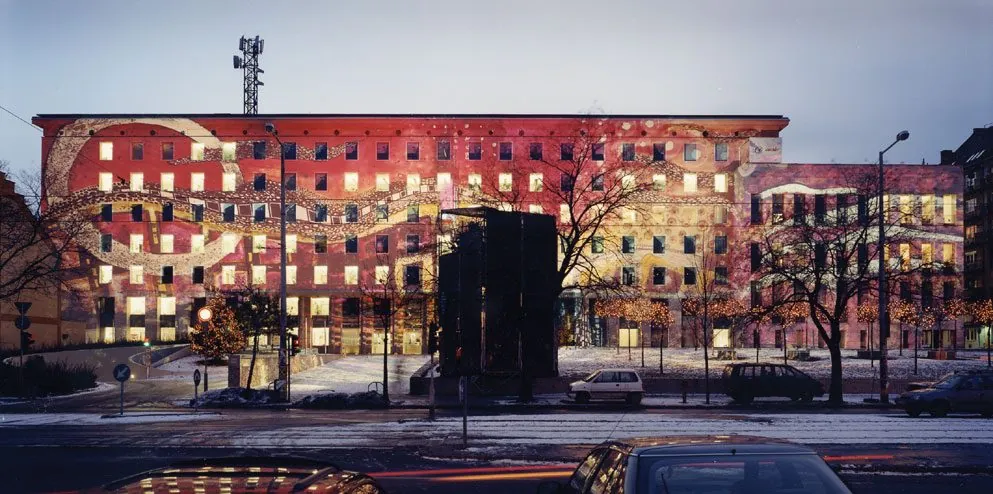
| 2001/2002 | Window in the City (Ablak a városban), Matáv headquarters, Budapest | [2][3][1] |
| 2002 | Sziget Festival, Budapest (venue: Fényár Hangár) | [2][3][1] |
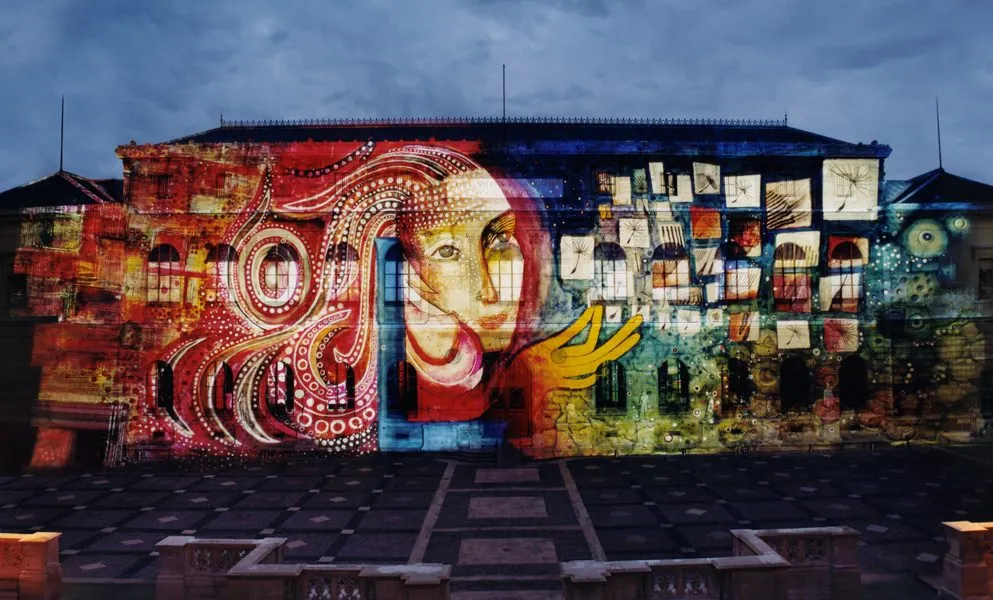
| 2003 | Larousse Night, École Nationale Supérieure des Beaux-Arts, Paris | [2][1] |
| 2003 | ACF (Audiovisual Creative Fair), Brussels: prize-winning stand design | [2] |
| 2004 | EU Accession Celebration, Millenáris Park, Budapest (20,000 m²) | [2][1] |
| 2004 | PLASA Show, London: booth design | [2] |
| 2004 | T-Mobile brand launch / T-Mobile day, Budapest (venue: Műcsarnok (Kunsthalle Budapest)) | [2][3] |
| 2004–2005 | Beambeings (Fénylények), Raypainting tower, Matáv headquarters, Budapest (9,500 m²) (light output: 1,380,000 ANSI lumen) | [2][3] |
| 2006 | Brandenburg Gate and Pariser Platz, Berlin: the last Raypainting project | [1] |
Project names are given as in the English sources. Highlighted values are disputed; see the notes below.
Kozma also mentions a projection with 20 Kodak Carousel projectors in the ballroom of the Casino in Montreux, shortly after the first Swiss shows in autumn 1996, and that the Christmas projection at the T-Com headquarters in Budapest, first made in 2001, became a tradition that grew year by year.
In a readers' chat of December 2005 Kozma said that on three or four projects they had worked thematic or corporate-identity elements into the composition for the client in an artistically acceptable way; for the Westel/T-Mobile name change in Hungary the previous year they had used T-Mobile's corporate identity unusually strongly, because it was a closed event, while on the other commissions they had worked with complete artistic freedom. At the time of the chat the Fénybolygó light-painting exhibition was on at the Magyar Telekom headquarters on Krisztina körút, open until 1 January from 4 pm to midnight, with concerts, DJ sets and performances every day at the foot of a transparent projection tower.[6]
Dóra Berkes recalls that in Switzerland they had more commissions than they could take on, and that the relationship with their Swiss manager broke off because they could not accept well-paid commissions entirely lacking in art, while he wanted to make money. Later she and Kozma also ended their collaboration, but until then, she says, over six or seven years they did an enormous amount of work in Hungary and abroad.[7]
The Flash portfolio menu of the archived raypainting.com website lists 16 sections: Convention center (CH), Lake of St. Moritz (CH), Swiss embassy (D), Matáv Telecom (H), Hotel Palace (CH), Hotel Kulm (CH), Castle of Colombier (CH), Ecole des Beaux Arts (F), PLASA London (GB), ACF in Bruxelles (B), Tresor club (D), Beambeings (H), Island music festival (H), T-Mobile day (H), Millenium park (H), Frankhegy art festival (H).[5]
Raypainting images
Photo copyright: Dorkandkozma. Photographers named in the Raypainting history: Lenke Szilágyi, Zsolt Fekete, György Török, Zoltán Kovács, Endre Somogyi, András Végh, Péter Kozma.
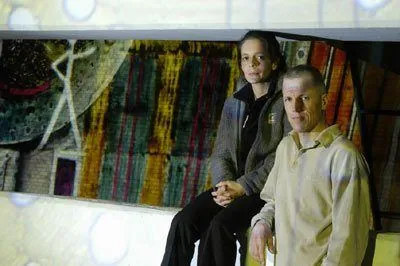
© Dorkandkozma 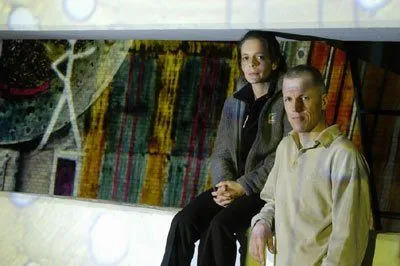
© Dorkandkozma 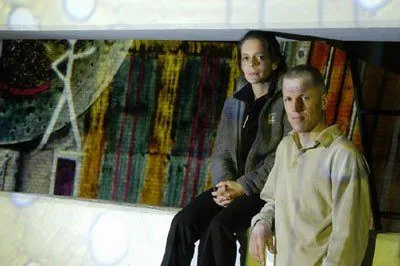
© Dorkandkozma 
© Dorkandkozma 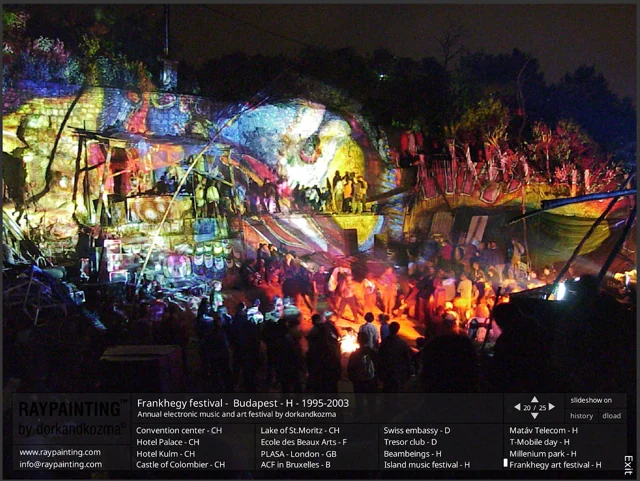
© Dorkandkozma
From the raypainting.com portfolio
Photo copyright: Dorkandkozma. Photographers named in the Raypainting history: Lenke Szilágyi, Zsolt Fekete, György Török, Zoltán Kovács, Endre Somogyi, András Végh, Péter Kozma.
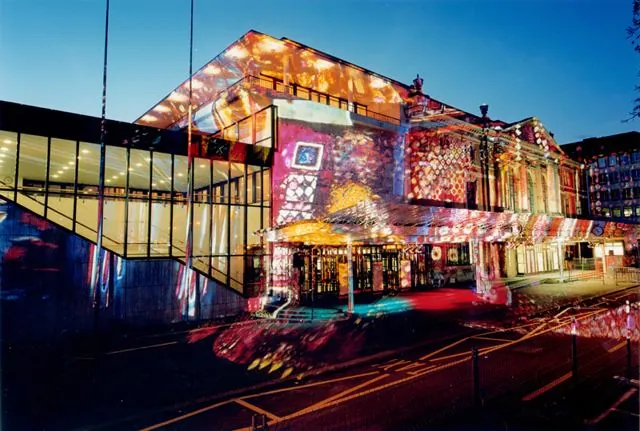
Convention center - CH · © Dorkandkozma 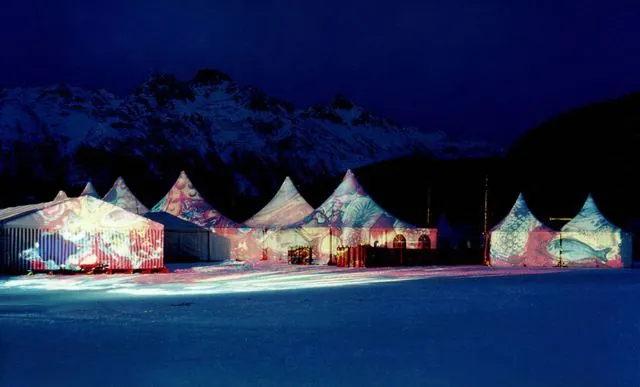
Lake of St.Moritz - CH · © Dorkandkozma 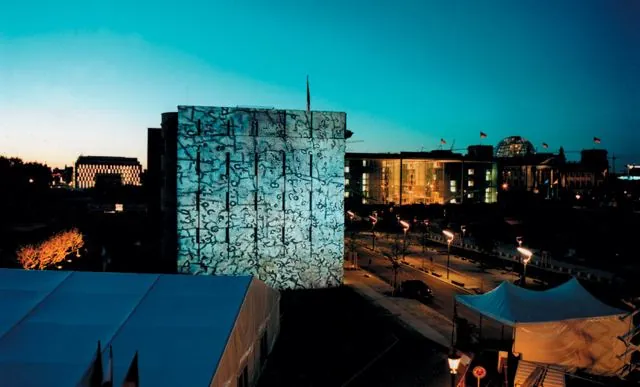
Swiss embassy - D · © Dorkandkozma 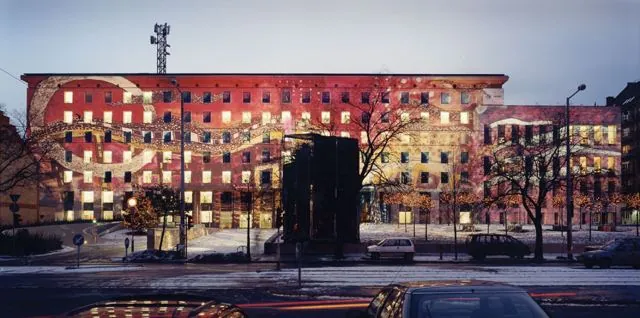
Matáv Telecom - H · © Dorkandkozma
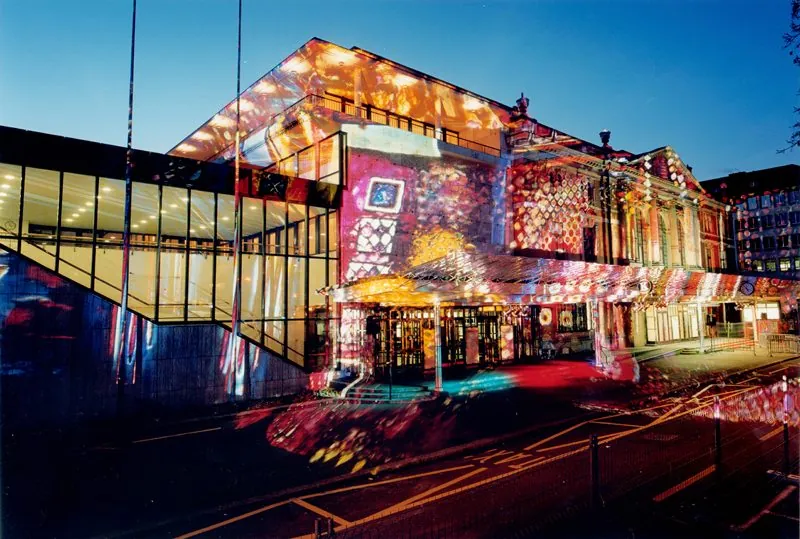
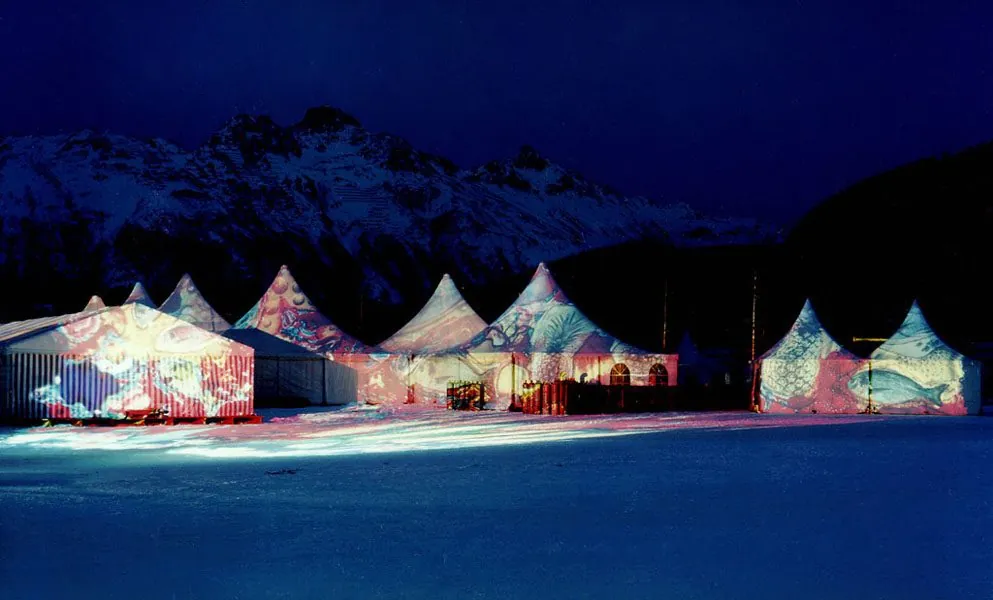
Gallery (16 images)
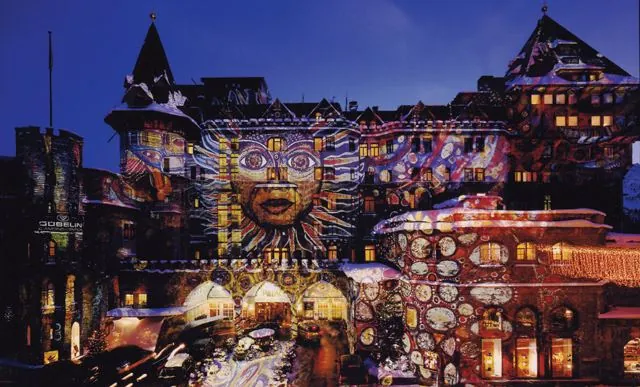
Hotel Palace - CH · © Dorkandkozma 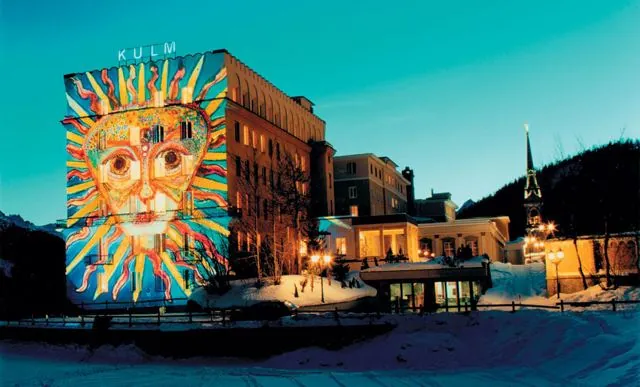
Hotel Kulm - CH · © Dorkandkozma 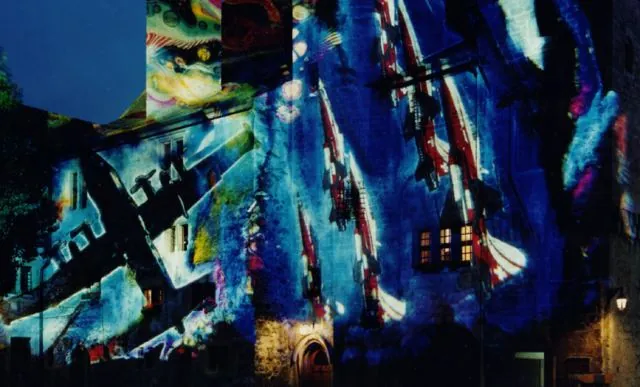
Castle of Colombier - CH · © Dorkandkozma 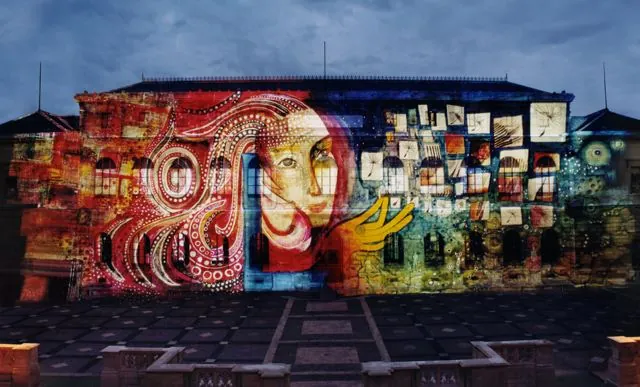
Ecole des Beaux Arts - F · © Dorkandkozma 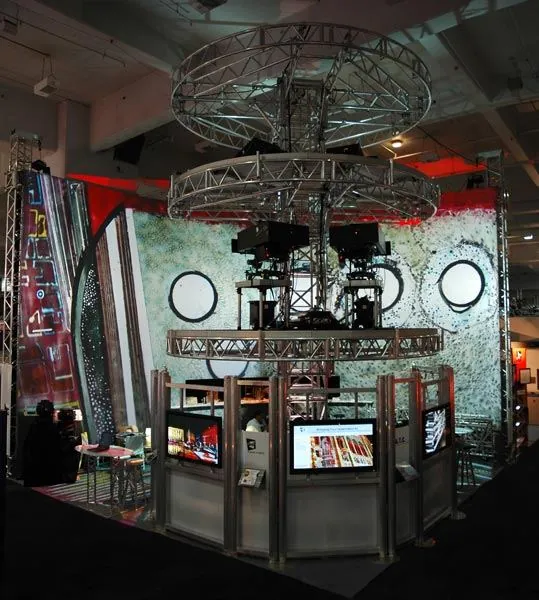
PLASA - London - GB · © Dorkandkozma 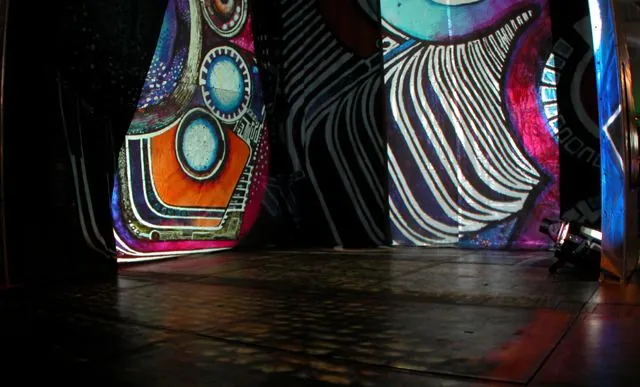
ACF in Bruxelles - B · © Dorkandkozma 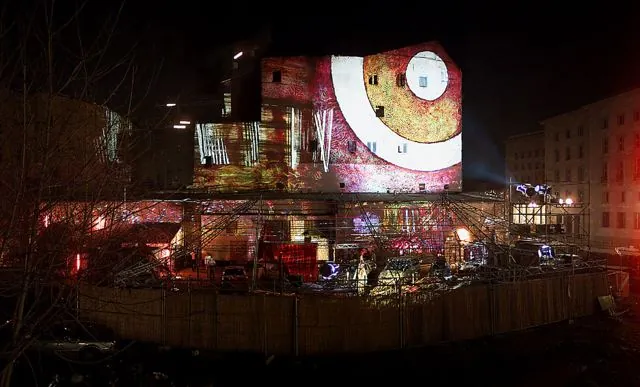
Tresor club - D · © Dorkandkozma 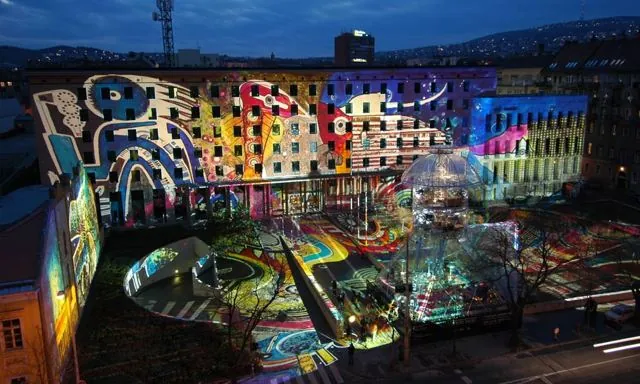
Beambeings - H · © Dorkandkozma 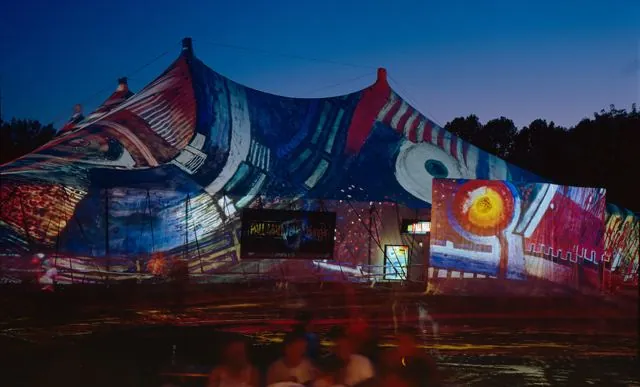
Island music festival - H · © Dorkandkozma 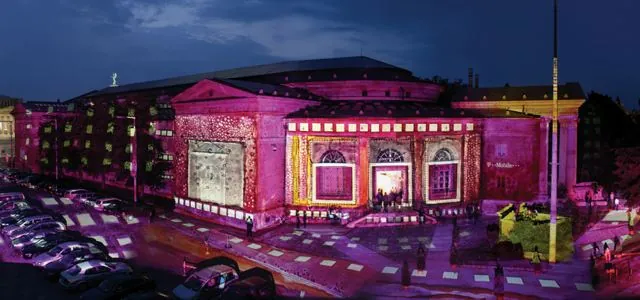
T-Mobile day - H · © Dorkandkozma 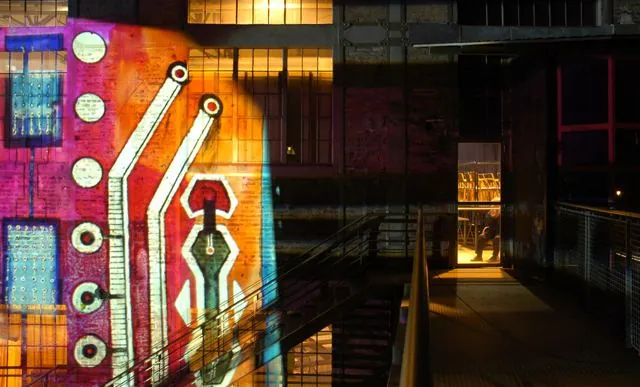
Millenium park - H · © Dorkandkozma 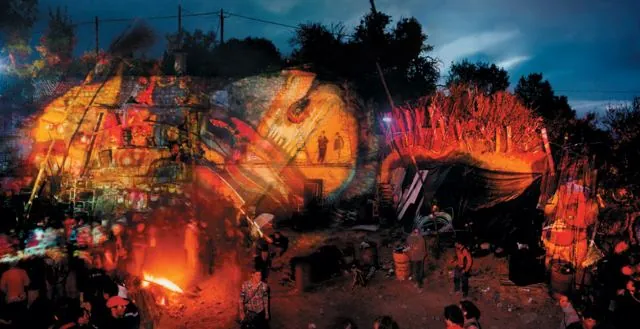
Frankhegy art festival - H · © Dorkandkozma